


Blog
How to Wear a 2-Point Rifle Sling? Step-by-Step Guide!


If you’ve ever carried a rifle for hunting, training, or range shooting, you already know one thing: comfort and control matter. A rifle sling is an essential part of your gear. Among all sling types, the 2-point rifle sling is our favorite for its balance, versatility, and simplicity.
But here’s the catch: owning one is easy; wearing it correctly is what makes all the difference. Whether you’re new to rifle slings or upgrading from a single-point sling, this TUXAPO hunting gear post will walk you through how to wear, adjust, and use a 2-point rifle sling like a pro.
Discover now!
What Is a 2-Point Rifle Sling?


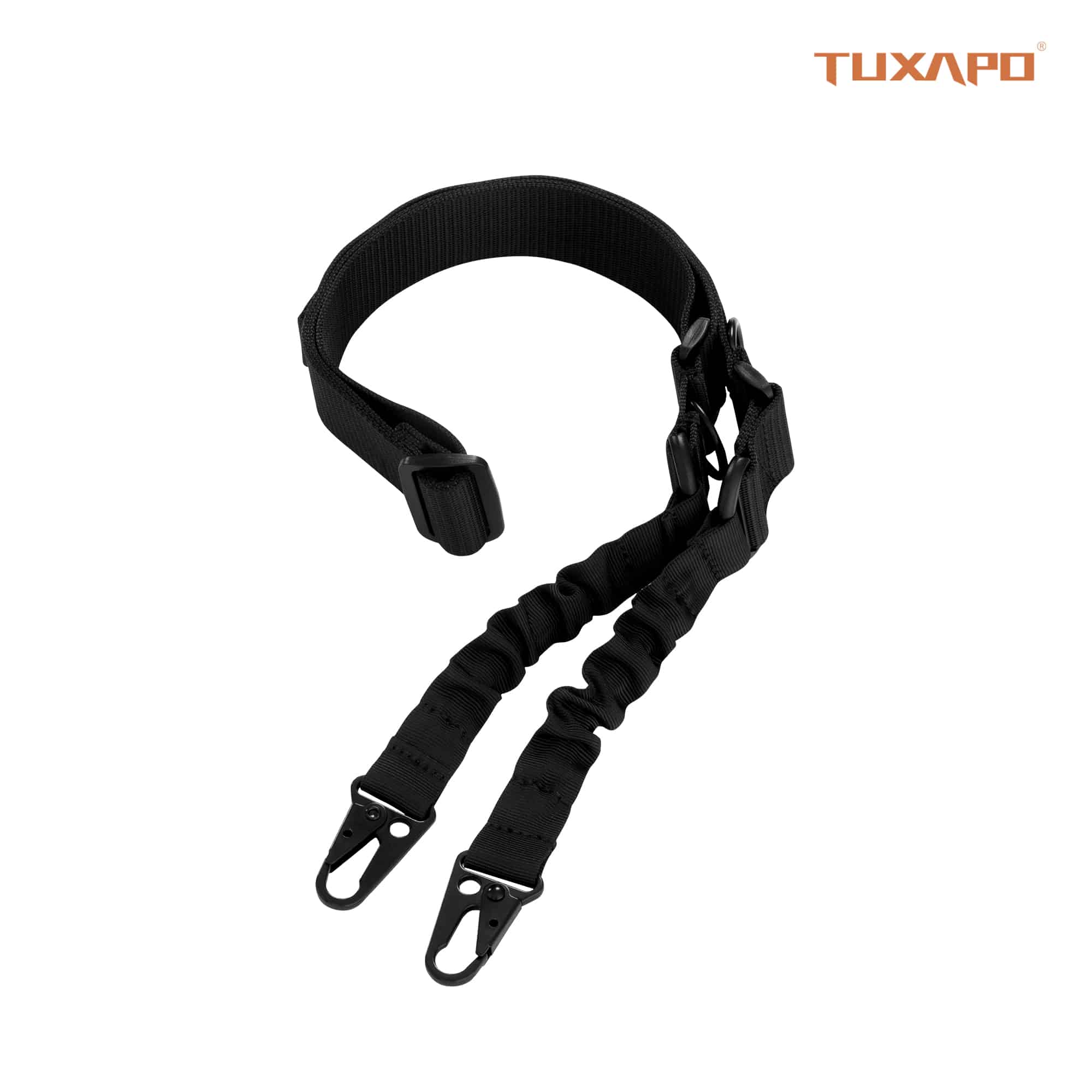
Source: TUXAPO hunting, tactical 2-point rifle sling collection
A 2-point rifle sling attaches to your rifle at two points: one near the buttstock and the other near the barrel or handguard. This setup gives us more stability and better weight distribution than a single-point sling.
It’s the most traditional sling design, yet still widely used by hunters, military personnel, and sport shooters because it provides a great balance between comfort, control, and versatility. Here are the main advantages:
- Better weight distribution: Reduces shoulder fatigue during long hikes or hunts.
- Stable shooting position: Can be tightened for shooting support or loosened for movement.
- Secure rifle carrying: Keeps your rifle close to your body, preventing swinging or dropping.
- Versatile carry options: Can be worn in multiple ways to suit your activity or preference.
If you’ve ever struggled with your rifle constantly bouncing or sliding off your shoulder, a properly worn 2-point sling will be a game-changer.
📚 Learn More: Rifle Sling Types and their Pros & Cons
Before You Start: Setting Up Your Sling
Before you can wear it right, let’s make sure your sling is properly installed and adjusted.
1. Attach the 2-Point Sling to a Rifle Correctly
Attaching a 2‑point sling with the front end on the handguard/front swivel and the rear end on the stock or rear swivel (receiver endplate/QD on ARs). This is the usual and usually best place for a two‑point sling. If your rifle doesn’t have sling swivels or QD mounts, you can buy adapters or sling studs.
The ideal positions change a little based on rifle type and what you want the sling to do. Here’s a quick, practical breakdown so you can pick the best placement for your needs:
- Front: handguard / front swivel/gas block
Pros: keeps the rifle stable, good for even weight distribution, works well for hunting and patrol carry. If you use M‑LOK or QD points on the handguard, you can move this point forward or back for different carry feels.
- Rear: stock swivel/receiver endplate / QD on stock
Pros: standard place for stability and easy transitions. On ARs, the receiver endplate or dedicated QD plate gives a low and secure rear mount.
- Alternate front points (forward on the barrel nut or gas block)
Move forward for a more “close to chest” carry and better balance when hunting/trekking.
- Alternate rear points (sling plate on buffer tube, cheekpiece, or stock rails)
Use these if you want a higher carry or a faster shoulder transition.
- Alternate rear points (sling plate on buffer tube, cheekpiece, or stock rails)
2. Adjust the Length
A sling that’s too tight will restrict movement, while one that’s too loose will make your rifle swing like a pendulum. Start by loosening it enough to wear comfortably, then gradually adjust:
- When standing upright, your rifle should rest flat against your chest or side.
- You should be able to shoulder the rifle quickly without excessive tugging.
Most modern 2-point slings, like the TUXAPO 2-Point Rifle Slings, have quick-adjust tabs, so you can change length instantly in the field.
Source: TUXAPO Quick-Adjust Rifle Sling Collection
3 Best Ways to Wear a 2-Point Rifle Sling
Now, let’s go over how to wear and position your sling. There’s no single “correct” way. It really depends on your mission, terrain, and comfort. But here are the three most popular and practical setups.
1. Traditional Carry (Over the Shoulder)

This is the simplest and most classic way to carry your rifle, much like carrying a bag.
How to wear it correctly:
- Place the sling over one shoulder, usually your support-side shoulder.
- Let the rifle hang down along your body.
- Adjust the length so the rifle sits comfortably, without dragging on the ground, but is easy to grab.
Best for:
- Walking short distances
- Quick carry without needing immediate shooting access
- Hunters or patrols moving through mild terrain
Pros:
- Simple and comfortable
- Easy to remove or reposition
Cons:
- The rifle may slip off the shoulder
- Not ideal for running or climbing
Pro Tip: If your sling has a non-slip rubber backing, it helps prevent shoulder slipping, which is perfect for long hunts or uneven ground.

Source: TUXAPO non-slip padded rifle slings
2. Cross-Body Carry (African or Front Sling Style)
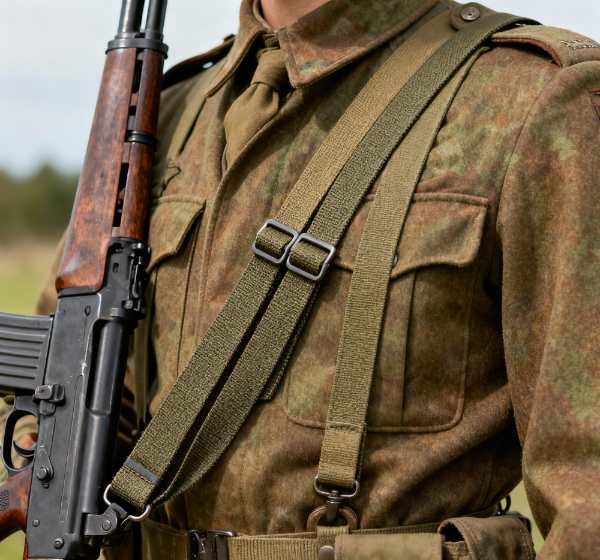
Cross-body sarry is the most popular modern setup because it offers both security and readiness. The sling goes across your body, letting the rifle hang diagonally in front of you or to the side.
How to wear it correctly:
- Place your head and one arm through the sling (so it crosses your torso like a seatbelt).
- The rifle should hang muzzle-down or muzzle-up, whichever you like.
- Tighten or loosen the sling so you can quickly shoulder the rifle for a shot.
Best for:
- Hunting
- Tactical or defensive situations
- Long patrols or hikes
Pros:
- Keeps the rifle securely to your body
- Quick transition from carry to shooting
- Prevents the rifle from bouncing around
Cons:
- Slightly slower to remove
- May feel tight with bulky gear or backpacks
Quick Adjust Tip: When you need to shoot, just pull the quick-adjust strap to loosen the sling and bring the rifle to your shoulder instantly.
3. Backpack-Style Carry
This is perfect for long treks or when you need your hands completely free. It distributes the rifle’s weight across both shoulders.
How to wear it correctly:
- Place the sling straps over both shoulders, like wearing a backpack.
- Let the rifle rest on your back, muzzle up or down.
- Adjust for comfort and make sure it’s not digging into your neck.
Best for:
- Long-distance hikes
- Carrying other gear (like binoculars or packs)
- When not expecting immediate engagement
Pros:
- Even weight distribution
- Comfortable for long periods
Cons:
- Slower rifle access
- Not suitable for quick action
How to Use a 2-Point Sling While Shooting?
A good sling can also stabilize your aim. Once properly worn, here’s how to use it for better control:
- Shooting Support: When in a standing, kneeling, or prone position, wrap your support arm through the sling and pull it tight. The sling’s tension helps steady your rifle, reducing muzzle movement.
- Quick Adjust for Ready Positions: If your sling has a quick-adjust tab, practice tightening for stability or loosening for movement. This feature allows you to shift from patrol carry to ready position in seconds.
- Transitioning Shoulders: Just loosen the strap slightly and swing the rifle under your arm.
Pro Tip: Practice transitions safely at home with an unloaded rifle before doing it in the field.
Common Mistakes to Avoid
Let’s check out a few to watch out for:
- Sling Too Loose: Causes the rifle to swing excessively. It’s not ideal when moving through brush.
- Sling Too Tight: Restricts your ability to shoulder or aim quickly.
- Wrong Attachment Points: Using mounts that are too far apart or misaligned affects comfort and stability.
- Poor Adjustment: Not using the quick-adjust feature properly makes you slower in real use.
- Neglecting Practice: A sling setup that works in your living room might fail in the field. Always practice with your full gear on.
TUXAPO Quick Adjust 2-Point Sling
Source: TUXAPO quick-adjustable padded rifle sling
At TUXAPO, we offer quick-adjust 2-point slings that provide a versatile, field-ready carry solution balancing comfort, speed, and control.
Built from durable nylon webbing with a textured underside, our 2-point rifle slings stay securely in place during long hikes and prevent shoulder slip. The one-hand quick-adjust tab lets you instantly tighten for a stable shooting position or loosen for fast movement and transitions.
Connect the sling to both the front and rear mounting points (sling swivels, clips, or M-LOK/QD mounts) so the rifle stays balanced and handles predictably. You can wear our slings cross-body (African/front sling style) for a secure, ready carry or drape it over one shoulder for quick, casual transport.
Easy to install and simple to maintain (wipe clean, air dry), our rifle slings suit hunters, range shooters, and tactical users who want fast adjustments, solid carry, and reduced fatigue.
➔ Explore More About TUXAPO 2-Point Rifle Slings
Practice Makes Perfect

Wearing and adjusting a 2-point sling takes practice. Don’t wait until you’re deep in the woods or on the range to test it. Try these at home or during dry-fire sessions:
- Adjust for different layers (summer shirt vs. winter jacket)
- Practice transitioning from carry to shooting
- Test both muzzle-up and muzzle-down carry positions
The more familiar you are with your sling, the faster and smoother your movements will be when it really counts.
Final Thoughts
Learning how to wear a 2-point rifle sling properly can completely change how you carry and shoot your rifle. It’s not just about comfort. It’s about control, readiness, and efficiency.
Whether you’re hunting deer in the backcountry, training at the range, or just improving your setup, mastering the sling will make you more confident and capable with your firearm.
Once dialed in, your 2-point sling will feel like a natural extension of your gear, helping you move faster, aim steadier, and carry smarter. Explore more TUXAPO tactical & hunting gear that is comfortable to wear!
Read More:
FAQs
Are 2-Point Slings Comfortable to Wear?
Yes, 2-point slings are comfortable to wear because they evenly distribute your rifle’s weight across your shoulder or chest. This reduces strain during long hunts or hikes, keeping your firearm stable and easy to carry all day.


