


Blog
Rifle Sling Types: Pros & Cons and How to Choose the Right One


If you’ve ever carried a rifle for hunting, target shooting, or tactical purposes, you know that a good rifle sling can make all the difference. Not only does it make carrying your firearm more comfortable, but it can also improve your accuracy and keep your rifle secure when you’re on the move. But with so many rifle sling types available, it can be confusing to know which one is right for you. Don’t worry, we’ve got you covered.
In this blog, we’ll break down the most popular rifle sling types, explain their pros and cons, and help you decide which sling fits your needs perfectly. Let’s get it started!
Why Rifle Slings Matter?
Before diving into types, let’s cover why slings are so important. A good sling:
- Improves Comfort: Carrying a rifle for long hikes or hunting trips can be exhausting. A properly fitted sling distributes weight across your body, reducing fatigue.
- Enhances Stability: Certain sling types allow you to brace your rifle, improving shooting accuracy.
- Keeps Your Hands Free: Whether climbing, walking, or handling other gear, a sling lets you carry your rifle hands-free.
- Protects Your Rifle: Slings keep your rifle secure and prevent accidental drops or scratches.
Now that we know why they matter, let’s talk about the different types.
6 Common Types of Rifle Slings
1. Two-Point Rifle Slings


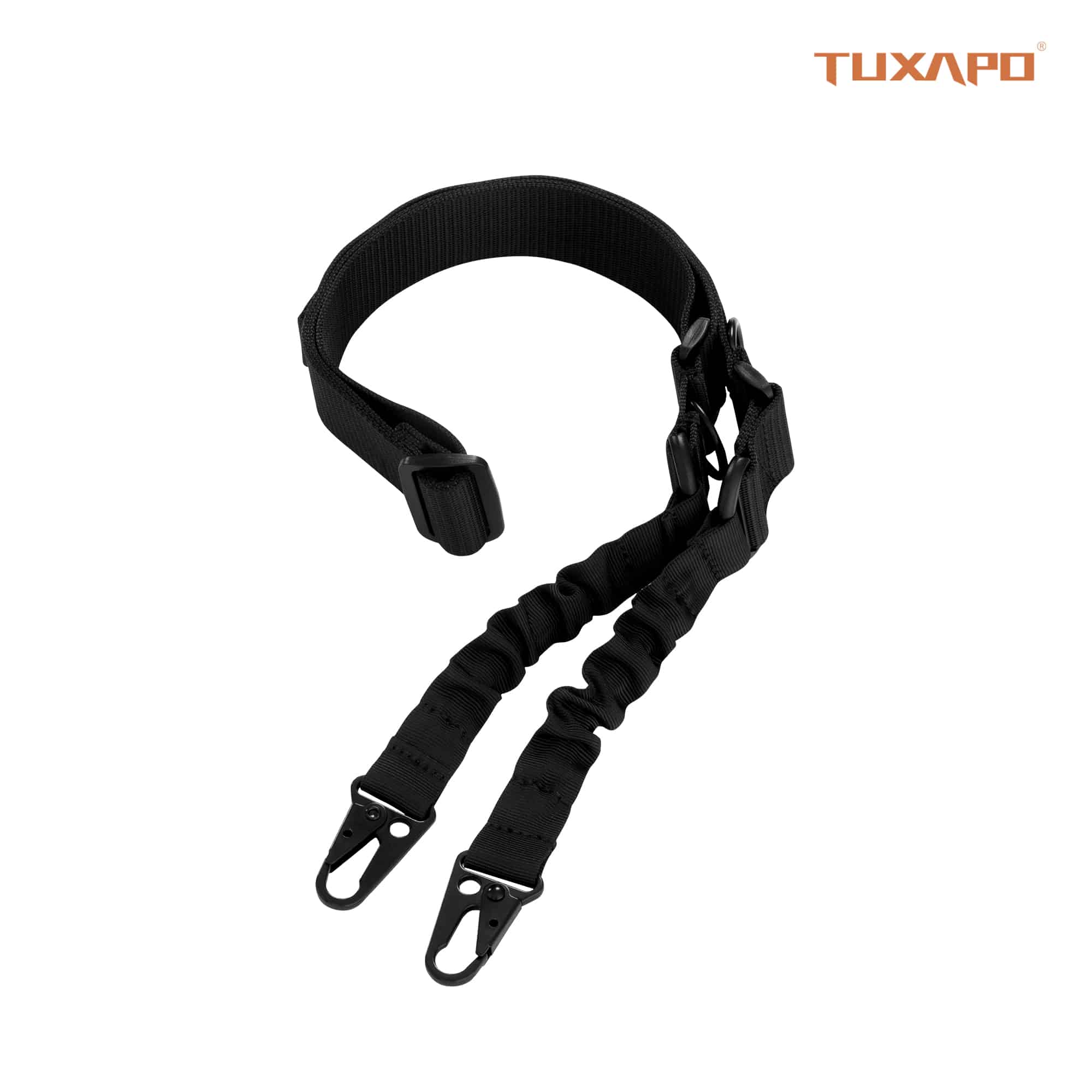
Source: TUXAPO 2-Point Non-Slip Rifle Slings
Two-point slings are the most common type, connecting to both the front and rear of the rifle. They’re the classic, workhorse slings, prized for their stability and versatility. Think of them as both a comfortable carrying system and a passive shooting aid: these slings keep your rifle secure while letting you move freely. And when used properly, they can even steady your aim.
How they work: One attachment near the muzzle/forend, one near the buttstock. The 2-point rifle sling forms a loop that you carry over a shoulder, across the chest, or wrap to create tension against your shooting position.
Common materials & features
- Nylon webbing: lightweight, inexpensive, weather-resistant.
- Leather: classic look, comfortable, can stretch/break in.
- Padded designs: foam or gel pads for long hauls.
- Quick‑detach (QD) swivels or standard sling swivels/studs for mounting.
- Adjustable buckles, push‑button QD, and ambidextrous designs for speed and convenience.
Practical uses & techniques
- Over‑the‑shoulder carry: fastest for short movement and ready transitions.
- Cross‑chest / hunters’ carry: stabilizes the rifle while hiking and keeps it accessible.
- Two‑point as a shooting aid: wrap the sling around your support arm or tighten it to create tension that reduces muzzle movement (use proper technique to avoid injury).
- Converts for use with packs: some slings have quick links to clip onto pack straps for secure transport.
Pros:
- Provides excellent stability for carrying and shooting
- Distributes weight evenly across the shoulder
- Easy to adjust for different carry styles (over the shoulder, across the chest)
Cons:
- Can be slower to transition to a shooting position compared to single-point slings
Best For: big-game spot-and-stalk, deer, elk, or mountain hunting, target shooting, and general-purpose use. Learn More: Best Rifle Slings for Different Hunting Types
Pro Tip: Look for padded two-point slings if you plan on carrying your rifle for long periods. ➔ Explore TUXAPO padded 2-point rifle slings.
2. Single-Point Rifle Slings
Single-point slings attach at a single point near the rifle’s receiver, allowing you to bring the rifle into a firing position quickly. They’re perfect for dynamic, close-quarters work. The rifle pivots freely, letting you transition between shoulders smoothly. While ideal for rapid movement, they can be less stable on long carries, bounce, and are not optimal for precision shooting without extra support.
Pros:
- Quick to sling the rifle into shooting position
- Easy to transition between shoulders
- Great for close-quarters or tactical scenarios
- Minimal snagging on packs and gear during fast movement.
Cons:
- Less stable when carrying long distances
- The rifle swings freely, which can be noisy for hunting
- Can cause shoulder fatigue on extended treks.
- Not ideal for precision shooting without additional support.
Best For: Tactical shooting, close-quarters scenarios, or when you need quick access to your rifle.
Pro Tip: Pair a single-point sling with a rifle that has sling mounts near the center of gravity for better balance.
3. Three-Point Rifle Slings
Three-point slings are less common but offer a hybrid design with three attachment points, combining hands-free carrying with stable shooting support. They’re ideal for situations where you frequently switch carry positions, change posture, or hand the rifle between people.
Pros:
- Provides both hands-free carrying and shooting support
- Keeps rifle secure in various positions
- Reduces rifle bounce during movement.
- Good for controlled transitions between roles.
Cons:
- More complicated to attach and adjust
- Can be bulky and uncomfortable if not properly fitted
- More hardware means more potential failure points.
Best For: Military or tactical users who need maximum versatility and security, hunters and handlers who frequently switch carry and firing positions.
Pro Tip: Consider a three-point sling if you often switch between carry and shooting positions quickly.
4. Elastic or Bungee Rifle Slings
Source: TUXAPO Rifle Sling Collection
Elastic (bungee) slings add stretch so the rifle moves with you instead of against you. They‘re great for fast, variable pacing. At TUXAPO, we provide elastic (bungee) slings that soak up jostling while you hike, cutting down on bang and sway when you’re scrambling over rocks or moving through thick cover. That stretch also makes quickly shouldering and presenting the rifle feel smoother.
Elastic (bungee) slings aren’t as traditional or long‑lived as leather or heavy nylon, but if you value comfort and shock absorption while hunting, they’re a smart choice.
Pros:
- Absorbs movement, reducing rifle sway
- Adds flexibility when moving quickly
- Can be more comfortable for long carries
- Smooth transitions to shooting position.
Cons:
- It can lose elasticity over time
Best For: Hunters who hike long distances, glass-and-stalk hunters, or those who need a bit of movement flexibility and reduced slap.
Pro Tip: Make sure the sling’s elasticity is strong enough to support the weight of your rifle.
5. Leather Rifle Slings

Leather slings are classic and often chosen for their durability and traditional style. Over time, they soften and mold to your shoulder for a custom fit, making long carries surprisingly comfortable.
Pros:
- Extremely durable if cared for properly
- Aesthetically pleasing, especially on hunting rifles
- Becomes more comfortable with use as it molds to your body
Cons:
- Heavier compared to synthetic slings
- Needs maintenance to prevent drying or cracking
Best For: Traditional hunters, collectors, or anyone who appreciates a classic look
Pro Tip: Apply leather conditioner regularly to extend your sling’s lifespan.
6. Tactical and Modular Slings
Modern tactical slings often come with modular designs, quick-release buckles, or adjustable straps for different configurations.
Pros:
- Highly versatile and customizable
- Quick-detach options for emergencies
- Can adapt to single-point, two-point, or even hybrid setups
Cons:
- Can be more expensive than basic slings
- Some designs are over-complicated for casual users
Best For: Military, tactical, or serious shooting enthusiasts
Pro Tip: Check if the sling is compatible with your rifle’s mounting points before buying.
Key Features to Consider
When choosing a rifle sling, don’t just look at the type. Consider these features:
- Adjustability: Look for slings that adjust easily to different carry positions.
- Padding: Extra padding improves comfort for long hikes or heavy rifles.
- Material: Nylon, leather, and elastic each have advantages, so just pick based on your needs.
- Quick Release: Useful in tactical or emergency scenarios.
- Width: Wider slings distribute weight better but may be bulkier under gear.
How to Choose the Right Sling for You
Source: TUXAPO Tactical 2-Point Padded Rifle Sling Collection
Choosing the right sling depends on your activities and preferences. Ask yourself:
- Do I need stability for long hikes? → Two-point sling with padding
- Do I need quick transitions in close quarters? → Single-point sling
- Do I value durability and style? → Leather sling
- Do I want maximum versatility? → Tactical/modular sling
Pro Tip: If possible, try slings in a store or borrow from a friend. Comfort and usability are often more important than the brand.
Bonus Care and Maintenance Tips
Even the best rifle sling won’t last if it isn’t cared for properly:
- Nylon/Elastic Slings: Inspect webbing and stitching regularly for frays or cuts. Wipe clean with mild soap and water; avoid harsh chemicals.
- Leather Slings: Use leather conditioner regularly and store in a cool, dry place.
- Metal Attachments: Check screws, swivels, and hooks for wear or rust. Replace worn swivels or buckles immediately. Failure of a mounting point = dropped rifle.
Final Thoughts
By understanding rifle sling types and their pros and cons, you can make a confident choice that suits your hunting, tactical, or recreational needs.
Remember, the best sling is the one that feels comfortable, fits your rifle, and makes your shooting or carrying experience easier. Whether you go for a classic leather sling, a quick-access single-point sling, a 2-point rifle sling, or a modern tactical option, investing in the right sling is always worth it.
➔ Explore More Details About TUXAPO 2-Point Rifle Slings.


